

01 // Specifications
What the SIXK Is Built Around
Expanded Specifications
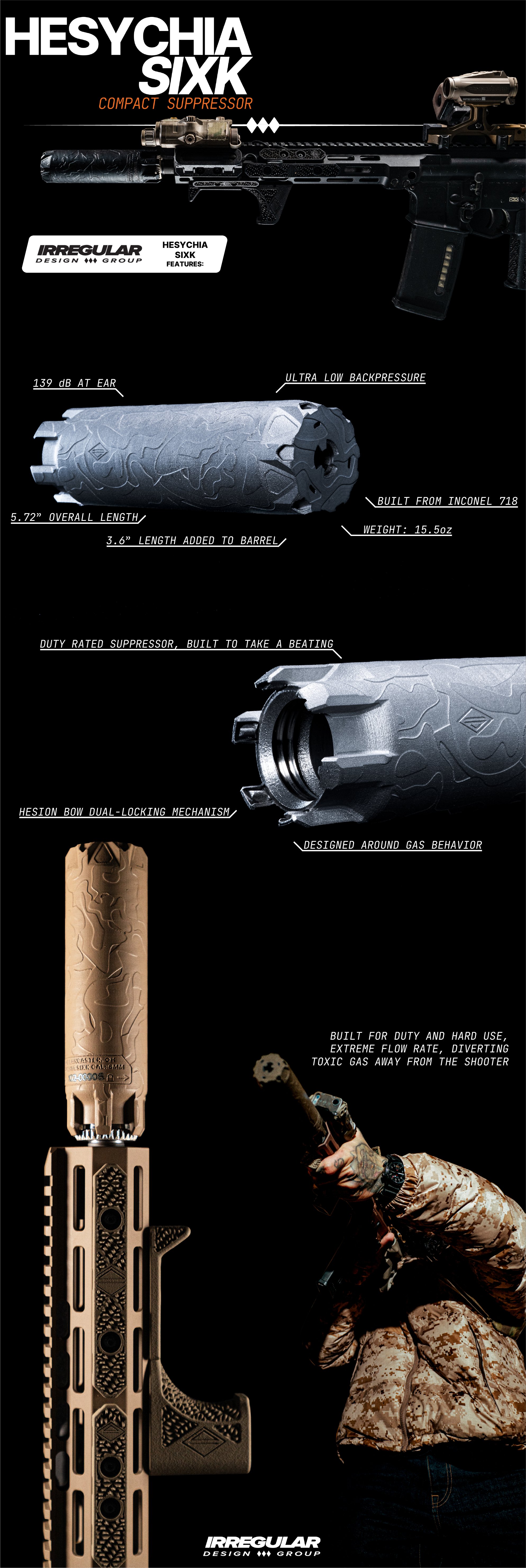
| Caliber | 6MM |
| Weight | 15.5 oz |
| Overall Length | 5.72" |
| Length Added to Muzzle Device | 3.6" |
| Diameter | 1.65" |
| dB at Ear | 139 dB |
| dB at Muzzle | 143 dB |
| Test Platform | DD MK18 10.3 |
| Material | Inconel 718 |
| Manufacturing | Laser Powder Bed Fusion (LPBF) |
| Gas Profile | Extreme Low Backpressure |
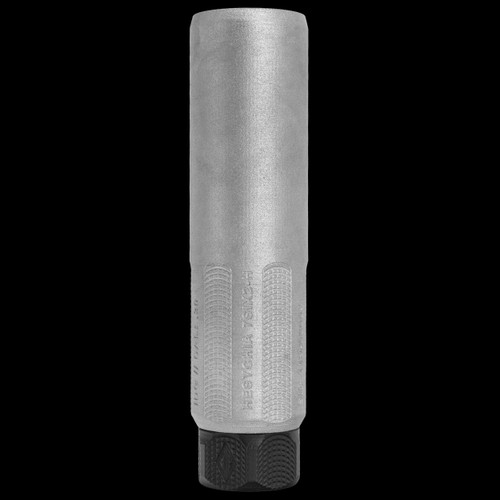
| Mount | Hesion Bow |
| Full Auto Rated | Yes |
| Compatible Muzzle Devices | HFH, Micro FE, Macro FE |
| Barrel Guidance | Full auto rated for 10.3" barrels and above |
02 // Engineering
Every Decision Starts With Shootability
Hesion Bow Lock System
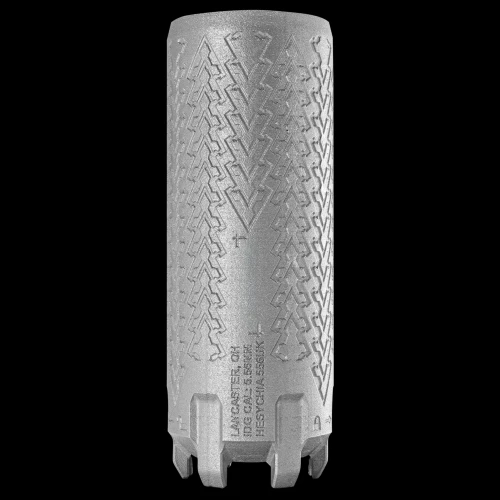
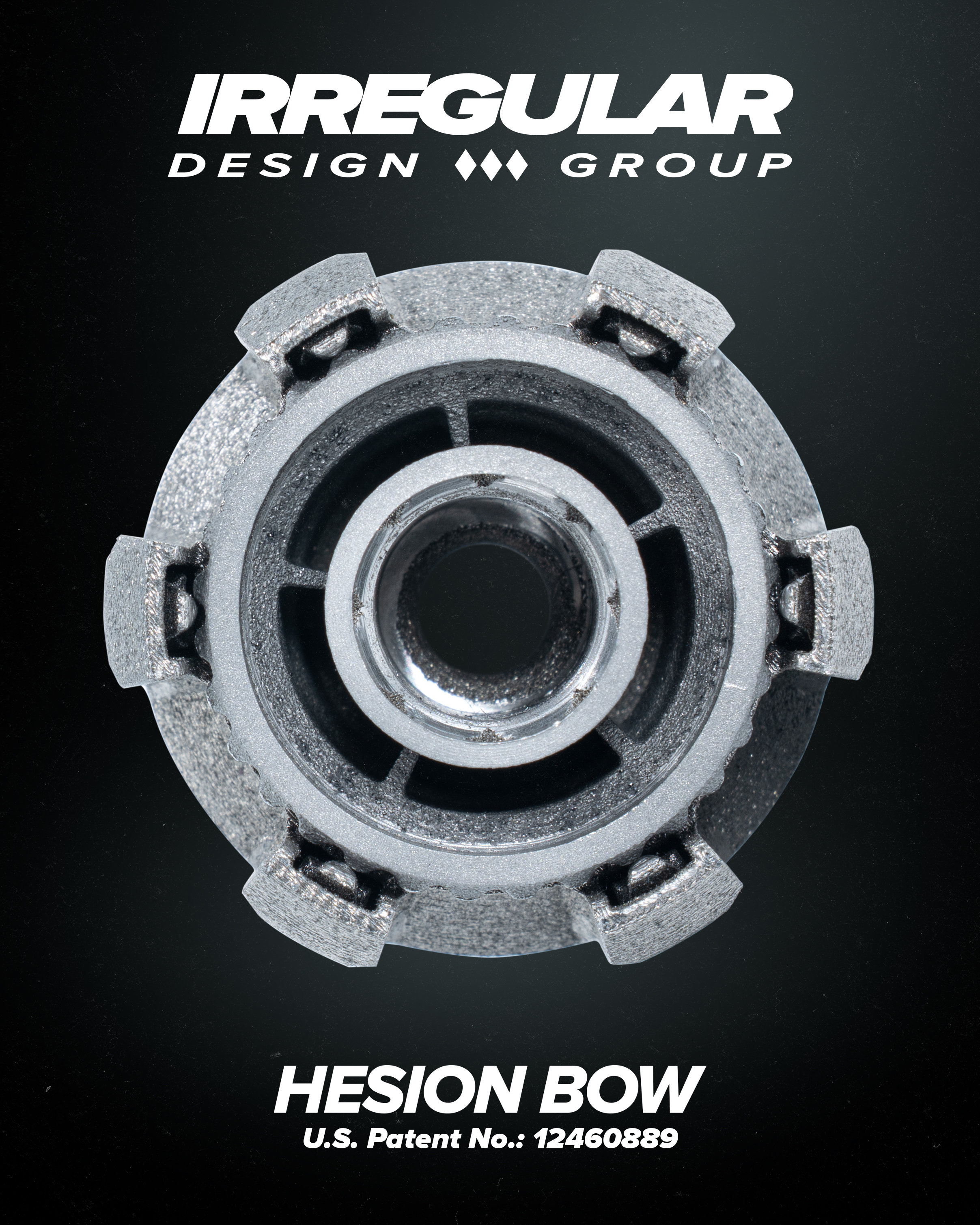
The Hesion Bow is a revolutionary dual-locking mechanism that sets the HESYCHIA series apart, delivering unmatched security and durability without complexity. Flexure pawls are printed within the suppressor body under protective hoods to provide six bi-directional indexing arms that engage within 32 grooves around the outer edge of the muzzle device. This is the only secondary locking system that is integral to the suppressor itself, adding only .5 oz. to the entire system.
The primary lock is still the 15-degree taper and the 1 1/8"-8 left-hand American Buttress Thread. With a 15-degree taper over 0.25" of length, just 15 ft./lbs. of torque generates over 1,700 lbs. of sealing force. This ensures gas management and concentric alignment under the intense pressures of a gunshot. The American Buttress Thread maximizes thread engagement and torque conversion and requires less than 2.5 rotations to achieve full taper lock.
While the 15-degree taper and American Buttress Thread as a stand alone quick detach locking system are enough on their own, the Hesion Bow system provides redundant and extremely light weight peace of mind that your silencer is secured. Two is one, one is none.
- Six flexure pawls printed into the suppressor body
- Thirty-two locking grooves on the muzzle device
- Integral redundant retention
- 15-degree taper over 0.25" of length
- 1 1/8"-8 left-hand American Buttress Thread
- Less than 2.5 rotations to full taper lock
Integral. Redundant. Secure.
Gas Management
Control the first instant. Everything downstream gets easier.
Back-pressure is controlled at the beginning. The muzzle device, blast chamber, early intake geometry, and first redirections matter more than most suppressor marketing will ever admit. That is where the real leverage is.
Gas enters a radial diamond structure in the initial chamber, gets disrupted and cooled, then gets pulled into annular pathways early, before the first blast baffle has a chance to become a pressure traffic jam. The goal is not simply to trap more gas. The goal is to move pressure off the muzzle immediately and distribute it across the entire suppressor so the gun cycles more like itself.
Monolithic Inconel 718 Construction
Designed around gas behavior first. Built in Inconel 718 to survive the job.
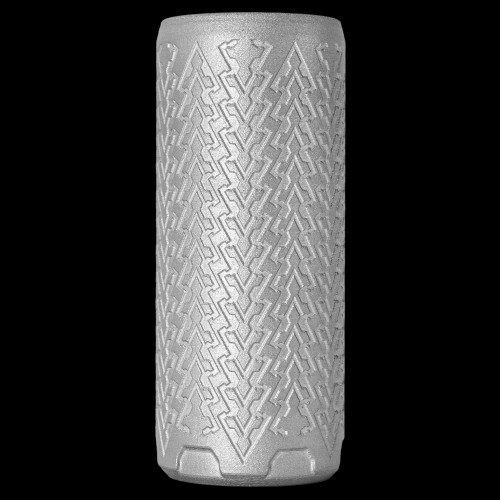
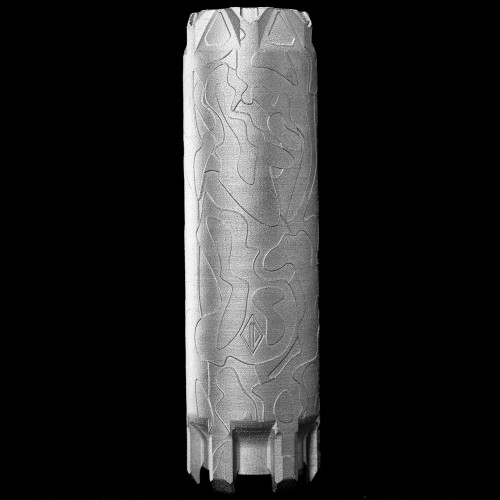
Laser Powder Bed Fusion matters here because the gas management architecture would be crippled if it had to be designed around drill paths, lathe access, or simple stacked components. Early annular intakes, captured helix paths, shielded ports, monolithic pawls, heavy internal filleting, and complex exterior textures are possible because the structure is printed as one piece and the critical interfaces are machined afterward.
Inconel 718 is the material choice because it holds its shape, resists erosion, and survives thermal cycling in a way that fits what this suppressor is built to do. It is not the lightest option and not the cheapest option. It is the one that makes the geometry viable under real rifle heat and use cycles.
Muzzle Device Logic
Hybrid Flash Hider
Use the HFH when the rifle will spend meaningful time both suppressed and unsuppressed. It is the more balanced choice for a mixed-use host, with stronger unsuppressed flash outcome and host behavior that makes more sense when the can comes off.
Flow Enhancers
Use the Flow Enhancers when the host is realistically going to live suppressed. The Micro and Macro Flow Enhancers are part of the suppressor's first-stage gas control and were developed to maximize suppressed performance by routing gas aggressively into annular and helix paths early.
The Hybrid Flash Hider and the Flow Enhancers do different jobs. The HFH is the better all-around answer when the rifle has to do both jobs, suppressed and unsuppressed. The Flow Enhancers make the most sense when the host is basically suppressor-dedicated and the priority is to enhance suppressor performance rather than preserve unsuppressed civility.
Design Envelope
The SIXK is full auto rated for 10.3" barrels and above. The minimum recommended barrel length for current 5.56 and 6mm rifle suppressors in this system is 10.3", and going shorter increases blast baffle erosion and raises projectile stability risk.
The design target was not 10.3" and shorter. The design target was an ultra low back pressure suppressor that could tolerate hard use, hot calibers, and high pressure without requiring the customer to retune the host just to make the system work. The pressure reality of 6 ARC was part of that target from the beginning, which is also why the system is well suited to strong SBR performance while still making sense on longer barrels.
03 // Maintenance
Keep It Running
The SIXK is a sealed monolithic unit. There are no user-serviceable internal components and no baffles to remove individually. Maintenance is straightforward. Start with correct setup logic, a clean interface, proper taper seating, and realistic host expectations.
Mounting Basics
Start with clean parts, correct torque, and proper taper engagement. Install the muzzle device to the barrel at 30 ft./lbs. Timing is not required for the HFH or Flow Enhancers, and threadlocker is not normally required under standard installation. Before mounting, make sure the taper and mating surfaces are clean so the suppressor seats on the taper rather than hanging up on dirt, debris, or a false stop.
Break-In and Validation
New systems should be mounted, seated, removed, and repeated for roughly 5 to 7 cycles. That initial wear-in helps the interfaces settle the way they were designed to. After that, do a short validation firing sequence and inspect for stable mounting, normal recoil impulse, no evidence of walk-off, and no indication that the host or can is doing something unexpected.
What to Watch For
A correct setup usually feels repeatable. The suppressor seats positively, the taper loads cleanly, and a slight rear gap remains when the system is correctly mounted. If there is no rear gap, the suppressor may be bottoming on the ring face instead of properly loading the taper.
Stop and Inspect
Stop and inspect if the suppressor does not seem to seat consistently, if you do not see the expected slight rear gap, if the mount feels gritty, uneven, or vague after repeated attempts, if you suspect alignment is off, or if the can appears to walk off during early firing. In most cases, walk-off is not magic. It usually means the taper was not fully seated or the interface was dirty when the system was mounted.
- Install muzzle devices to the barrel at 30 ft./lbs.
- No timing required for HFH or Flow Enhancers
- Threadlocker is not normally required under standard installation
- Cycle the mount 5 to 7 times on a new system
- A slight rear gap helps confirm proper taper seating
4 Reviews Hide Reviews Show Reviews
-
Phenomenal!
I’ve only gotten 200 rounds through it so far, but I am unbelievably impressed! This suppressor is on my Geissele 11.5” 5.56 and I was blown away at how quiet this thing was and there was truly zero gas to the face! I had high expectations for this suppressor, but I was still impressed. One word to describe the shooting experience with this suppressor: PHENOMENAL!
-
Hesychia SixK
I have owned my Hesychia for 3-4 months now and have put a couple thousand rounds through it. I shoot left handed and have extensive experience on a variety of AR platforms ranging from 11.5-16”, using Surefire RC2, RC3, and HUXWRX Flow 556K. I bought the Hesychia with the hope that it would give me an upgrade in gas management, attachment interface, and signature suppression, and I am happy to report it does all of that quite well! The Hesychia is now my favorite suppressor for general AR-15 shooting and the most pleasant for me to shoot with regards to gas management and sound suppression. The Hesion Bow mounting interface is badass and works as advertised: tighten to hand-snug only and removal is no problem. The degree to which this whole system is designed, engineered, and executed is quite impressive and I couldn’t be more pleased with my purchase. Plus, Sean and his team are awesome and great people to deal with.
-
HESYCHIA SIXK
Received this suppressor, and although I haven't been able to use it yet, the quality, packaging, and customer service are outstanding!!
-
A game changer for a lefty shooter
As a left-handed shooter, I’ve always struggled with the infamous "shit in the face" issue when firing a suppressed rifle, especially with right-hand setups. The IDG Hesychia Sixk suppressor has been a game-changer. Its compact and lightweight design delivers an impressively clean and quiet shooting experience. The low back-pressure significantly cuts down on gases and debris blown back toward me, making every shot far more comfortable. Cleaning my rifle is now a breeze, with noticeably less buildup inside. This suppressor is a must-have for any shooter looking for performance and comfort—I can’t recommend it enough! -Lefty Approved--